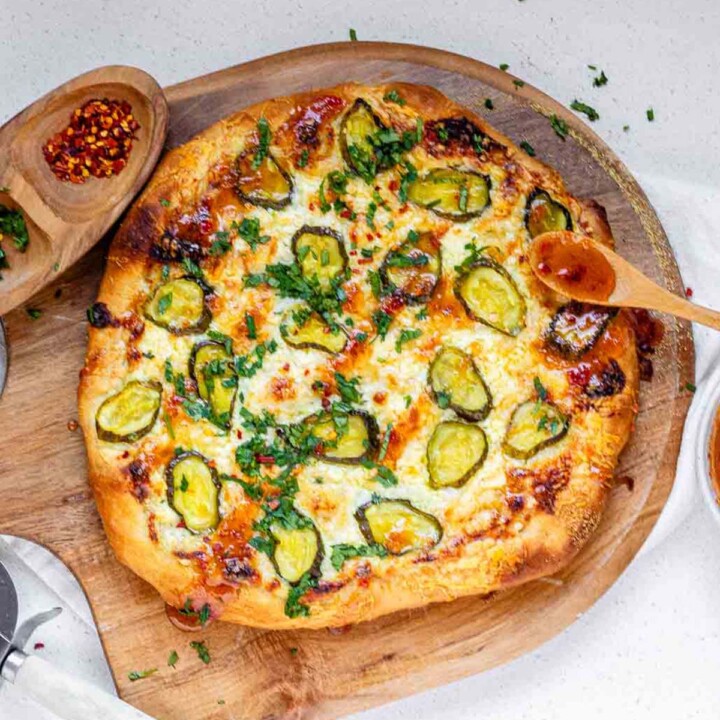
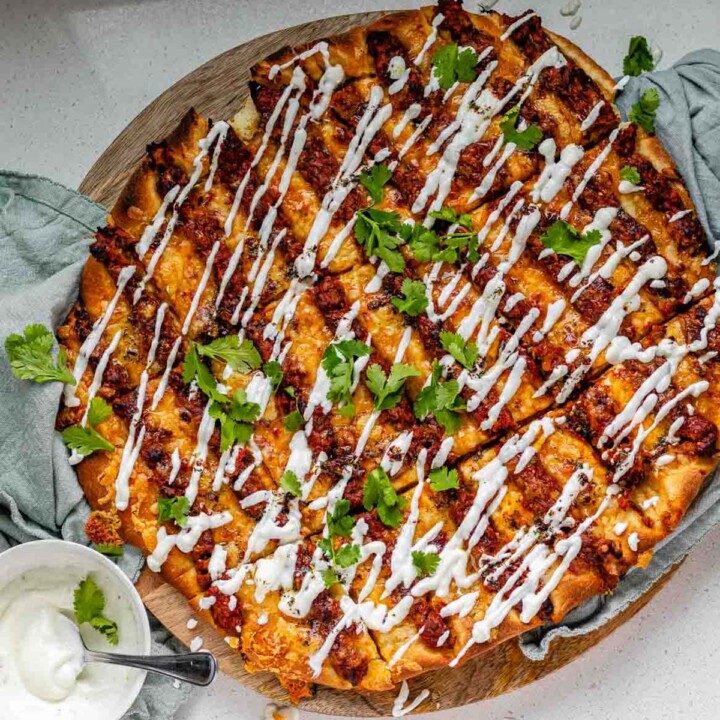
Pizza night at home is one of our favorite family dinners. It can be more budget-friendly than ordering out, you can control the ingredients, and honestly, it’s just more fun, customizable, and tastes great.
I make my pizza dough and pizza sauce from scratch, but having the right tools and pantry staples makes the process easier and the result way better. If you’ve ever struggled with a soft crust or awkwardly trying to get your pizza into the oven, the right gear changes everything. Read ahead for my kitchen tool recommendations.

This author receives a commission through recommended links in this content. Thanks for your support!
For all of the tools below, I try to link to the things I actually use in my kitchen, like a pizza stone. For some items, I link to a similar item on Amazon. It can help to read the reviews on Amazon when making your choice, and I tell you below exactly why I use these items in my kitchen. Leave a comment if you have any questions!
Essential Pizza Tools
1. Pizza Stone
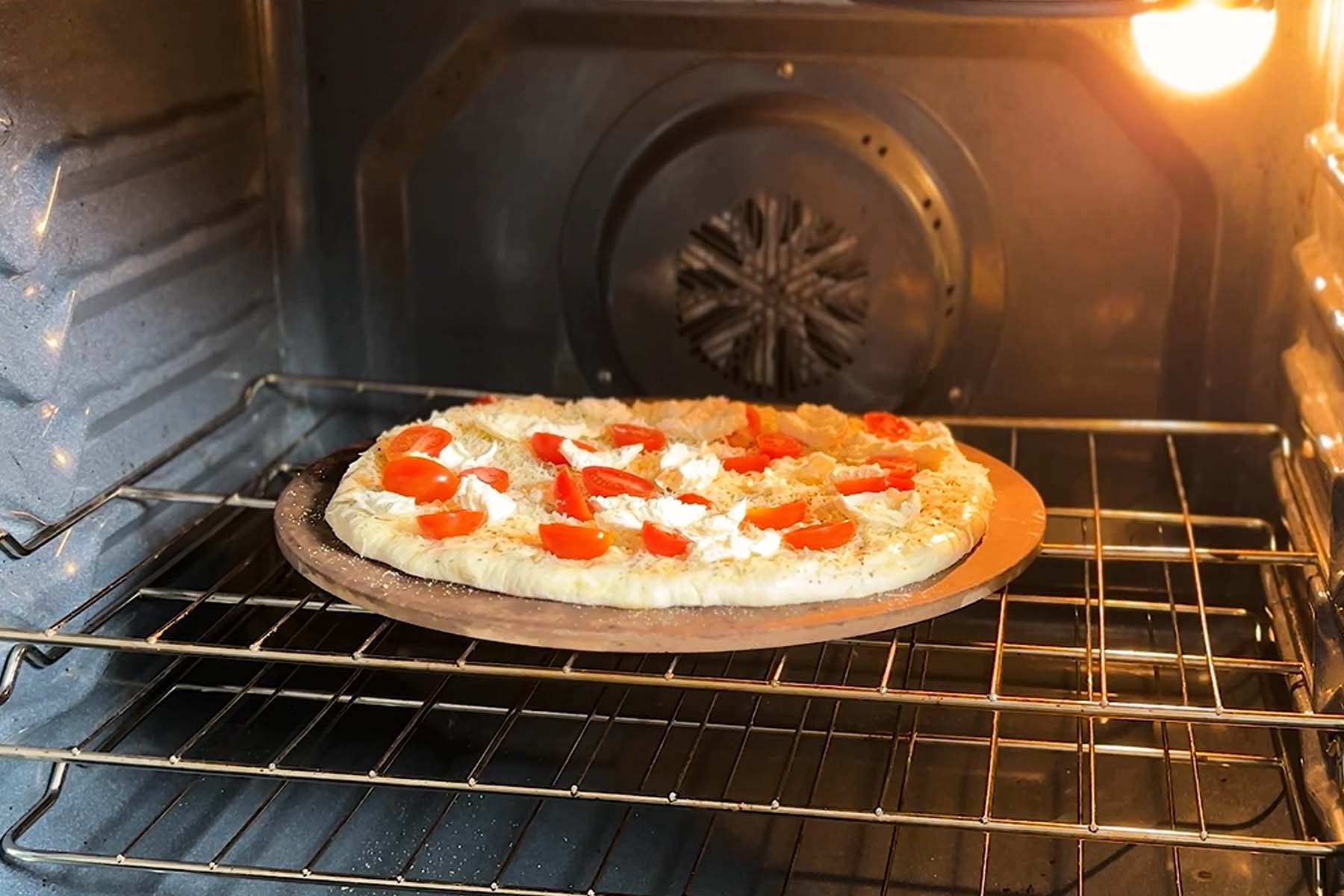
A pizza stone (or steel) is the #1 tool for getting that restaurant-style crust. It absorbs and holds high heat, giving you a crisp bottom that a regular baking sheet just can’t. If you bake a lot of bread, you’ll use this beyond pizza night. Try this broccoli cottage cheese pizza on a pizza stone for a crispy crust.
Tip: Preheat the oven with the pizza stone in it, and do this a bit in advance if possible, to make sure the stone is very hot. I like to let mine sit in the hot oven for at least 15-20 minutes before I slide a pizza onto it.
What I Personally Use: My pizza stone is a round one I bought at a local shop. It’s similar to this pizza stone on Amazon, and has the metal stand.
2. Pizza Peel

A pizza peel is the big wooden (or metal) paddle you see in pizzerias. It lets you slide your pizza onto the stone safely and smoothly. Without one, you’re stuck trying to move floppy dough with your hands, which is impossible. You can try using the other side of a flat baking sheet that has heavy cornmeal, but the peel is so much easier.
Tip: To use it, you’ll roll or hand-pull your pizza dough into shape and then heavily dust the peel with cornmeal. This is essential; it helps ensure the pizza can slide off onto your stone without getting stuck, bunching up, and being mishapen and possibly squished together with no hope of fixing it.
I like to place the dough on the peel and shake it just a bit to make sure it will move. Then I add my sauce and toppings.
Next, slide the pizza onto the stone and let it cook! Use the peel to remove the pizza from the stone. This can take practice to do with one hand in a hot oven, so for beginners, I usually recommend that they slide the peel under the pizza about an inch or two and then use tongs to help pull the pizza onto the peel.
Slide the pizza onto a cutting board and let it rest 3-4 minutes before cutting so that the cheese can settle a bit.
What I Personally Use: My peel is from a local shop, but is similar to this pizza peel on Amazon. I prefer a wooden one for the aesthetics but there are metal pizza peels too.
3. Pizza Cutter or Wheel
A sharp pizza cutter makes serving way easier. I like the wheel style, but a rocking blade cutter is another good option if you bake pizza a lot. Works well on flatbread pizza also.
Tip: Let the pizza rest for 2–3 minutes before cutting. This keeps the cheese from sliding off and gives you cleaner slices. Hold the wheel firmly with one hand and use your other hand to stabilize the pizza. Always cut on a cutting board or pizza pan, not directly on your baking stone, to avoid damaging it. I like to stamp the cutter into the crust and then press firmly and roll in one smooth motion.
What I Personally Use: I like the wheel-style pizza cutter.
4. Cast Iron Skillet

If you want deep-dish or pan-style pizza, a cast-iron skillet is the way to go. Cast iron heats evenly and holds that heat, which gives you a golden, crispy edge and a perfectly cooked crust.
It also transitions seamlessly from stovetop to oven, so you can start your dough on the burner for a head start on crisping before baking. Another bonus: cast iron is basically indestructible and lasts a lifetime if you care for it properly. And, yes, you can wash it with soap. Just give it a light coat of oil after drying it fully.
Tip: Be sure to oil the skillet lightly and add cornmeal, so the dough doesn’t stick and gets crispy.
What I Personally Use: I have 3 cast-iron skillets by Lodge, all in different sizes.
Helpful Accessories
1. Bench Scraper

A bench scraper is one of those inexpensive tools that becomes indispensable once you own it. It helps you divide dough evenly, move sticky dough without using extra flour, and scrape flour or crumbs off your counter when you’re done. It’s also great for transferring chopped vegetables or herbs into a pan. I use mine when I’m making biscuits, scones, simit, and dough.
Tip: Use a bench scraper instead of a knife to scoop up chopped onions or herbs, it helps you move them swiftly and saves the end of your knife from dulling.
What I Personally Use: I have a plastic bench scraper and a metal bench scraper, and I use both of them often. The plastic one has measurements that can be helpful.
2. Rolling Pin
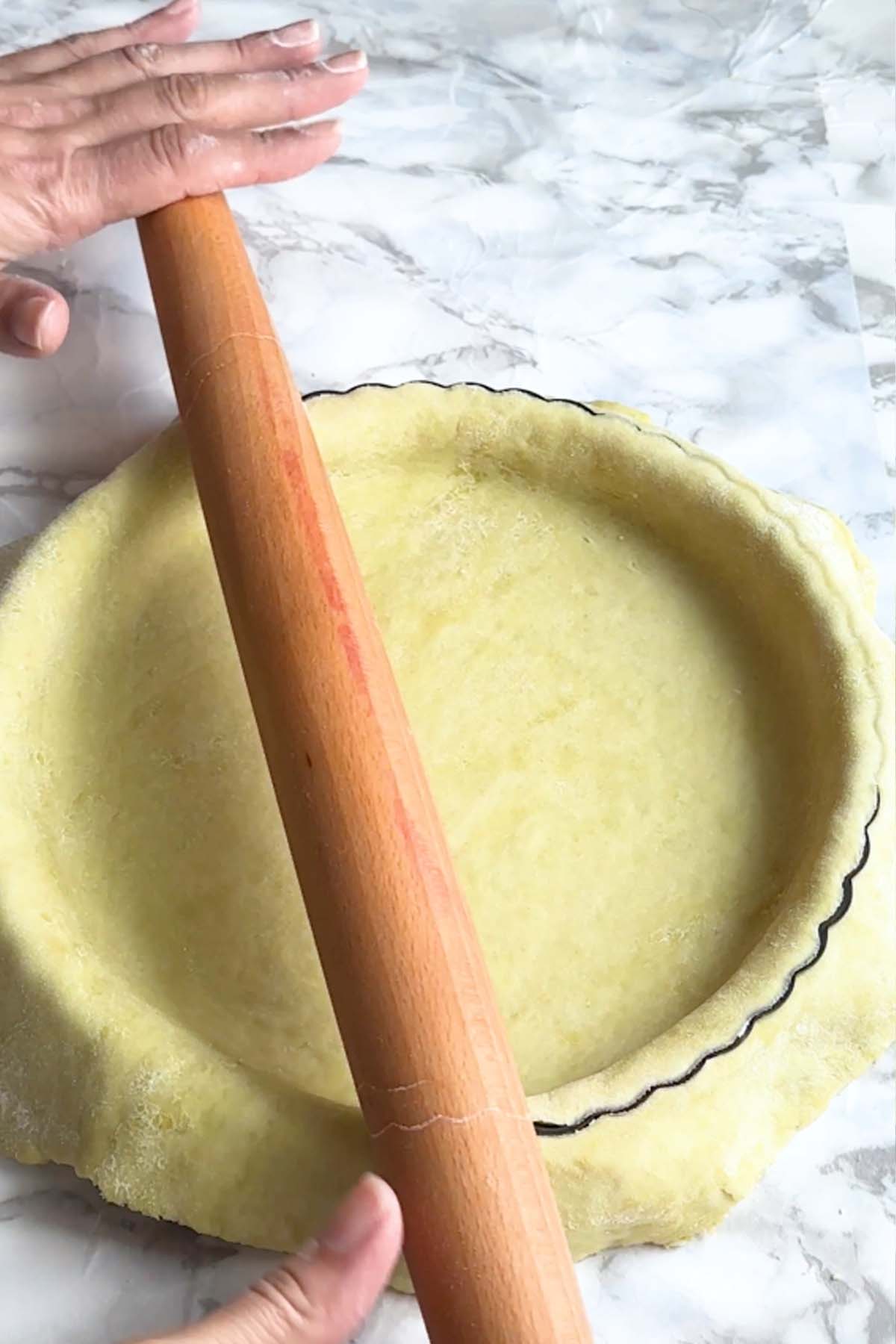
I usually stretch pizza dough by hand, but a rolling pin comes in handy if you want a very thin, even cracker-like crust. It also works well if you’re making personal-sized pizzas or flatbreads.
Tip: Lightly flour your rolling pin and dough to prevent sticking, but don’t overdo it.
What I Personally Use: I like a French rolling pin, you can see it in the above photo. I also have a marble rolling pin and a few wooden rolling pins with handles from Mexico. Get one that you like the feel of, whether it’s one with handles or without.
3. Pizza Pans With Holes

These pans have holes on the bottom that let hot air circulate under the crust. The result is a crispier bottom than you’d get with a solid pan, especially if you don’t have a pizza stone. They’re also lighter and easier to handle than cast iron.
I used my pizza pan for the Thai-inspired chicken pizza above.
Tip: Get a large pan for more flexibility. You’ll be able to make large or small pizzas.
What I Personally Use: I like a large round pizza pan with holes.
4. Kitchen Aid Mixer

If you make pizza dough often, a stand mixer is helpful, but not necessary. The dough hook kneads everything for you, which saves time and gives you a smooth, elastic dough without the workout.
It’s also versatile. I use mine for bread, cookies, and whipping Swiss meringue buttercream. A stand mixer isn’t necessary for great pizza, but if you already bake or cook a lot, it’s a great investment.
Tip: Always start mixing on the lowest speed when making dough to avoid flour clouds. Let the mixer do the kneading for 5–7 minutes until the dough is smooth and stretchy.
What I Personally Use: I have the KitchenAid Pro 600 Series 6-Quart lift stand mixer. It claims to be able to mix up 13 dozen cookies, but I’ve never done that many at once. Watch for sales for these big-ticket items.
Pantry Items for Pizza Night
Olive Oil
Adds flavor and richness to pizza dough and makes the crust golden.
Tip: Brush the edges of your dough with olive oil before baking for a deep golden finish.
What I Personally Use: This Greek Olive Oil by Melina is my favorite.
Instant Yeast
Fast, reliable, and no proofing required. I use instant yeast for a lot my pizza and bread recipes.
Tip: Store opened yeast in the freezer in an airtight container so it lasts longer.
What I Personally Use: I like Fleischmann’s Instant Yeast. I first tried this years ago and even worked with the company to create my Thai Chicken Pizza recipe.
Frequently Asked Questions About Homemade Pizza
They’re helpful for mimicking the heat of a pizza oven, but not essential. A cast-iron skillet or a perforated pizza pan can also give you a crisp bottom crust.
Instant yeast can be mixed directly into your dough, while active dry yeast needs to be dissolved in warm water first. Instant yeast also tends to work faster, which makes it great for weeknight pizza.
Use a pizza wheel or rocker knife and let the pizza cool for a couple of minutes before slicing. Cutting too soon can drag the cheese and toppings around.

Homemade pizza night doesn’t have to be complicated. It just gets better with the right tools. A stand mixer takes the work out of kneading, a pizza wheel keeps slices neat, and even something as simple as a bench scraper saves you time and frustration.
You don’t need a professional pizza oven to make pizza worth craving at home; you just need a few smart tools and good ingredients.
If you’re stocking your kitchen or shopping for a gift, start with one or two of these essentials. Once you have them, you’ll see how much easier pizza night becomes, and you might even skip delivery for good.
Start with my pizza recipes below, or use your creativity and come up with a new family favorite.